
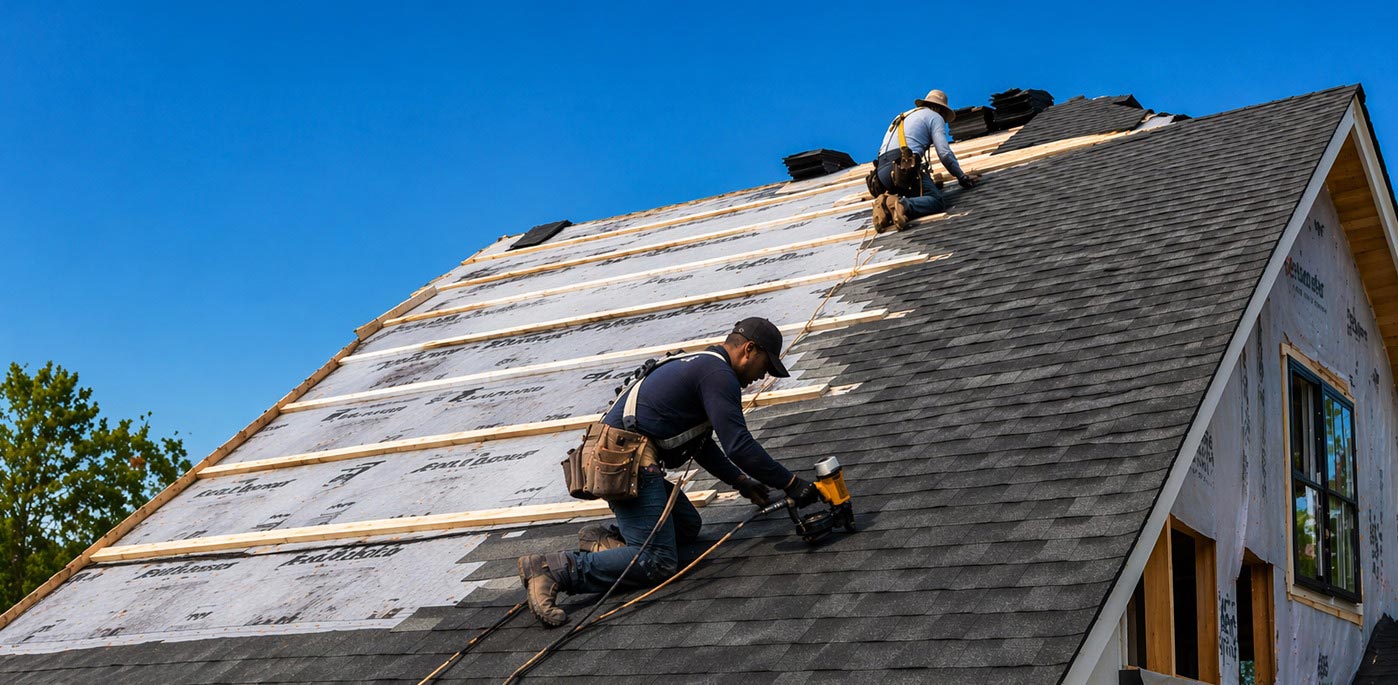
There’s a sound every roofing contractor dreads, not the crack of a bad install, not the buzz of a competitor’s truck rolling through your territory. It’s silence. The silence of a phone that rang, went unanswered, and cost you more than you probably realize.
Missed calls in the roofing business aren’t just a minor annoyance. They’re a direct drain on your revenue, your reputation, and your ability to grow. And the wild part? Most roofing contractors don’t actually know how much they’re losing because the money that walks out the door never shows up as a line item on your P&L.
Let’s fix that. Here’s how to calculate the real cost of missed calls for your roofing business and what you can do about it starting today.
Why Roofing Leads Are Uniquely High-Stakes
Before we get to the math, let’s talk about why this matters so much more in roofing than in most other trades.
Roofing is a high-ticket, decision-urgent business. When a homeowner calls about their roof, something has usually happened: storm damage, an active leak, a failed inspection, a neighbor who just got a new roof, or a renovation itch sparked. In most cases, they’re not casually browsing. They need someone, and they need someone now.
Here’s the brutal reality: the roofing contractor who answers first wins the appointment the majority of the time. Not the best contractor. Not the one with the most reviews. The one who picks up the phone.
Roofing is also inherently seasonal and weather-driven. After a major hailstorm or wind event rolls through a market, the phone rings off the hook for a short window. Miss those calls during your highest-revenue days of the year, and you’re not just losing one job. You’re losing your storm season.
That’s what makes a home services call center purpose-built for roofing, not just a convenience; it’s a competitive weapon.
The Missed Call Cost Calculator: Do the Math on Your Business
Let’s run the numbers. Grab a napkin or a spreadsheet; either works.
Step 1: How many calls do you receive per month?
The average mid-size roofing company running active marketing might receive anywhere from 100 to 400+ inbound calls per month, depending on seasonality, geography, and lead sources. For this example, let’s say you’re getting 200 calls per month.
Step 2: What’s your answer rate?
Here’s where it gets uncomfortable. Research consistently shows that the average home service contractor answers the phone about 55% of the time. That means roughly 45 out of every 100 calls go unanswered: to voicemail, to ringing forever, or to an overwhelmed employee who couldn’t get to it in time.
If you’re getting 200 calls a month and answering 55%, that’s 90 missed calls every single month.
Step 3: What percentage of answered calls convert to booked inspections?
For qualified roofing leads, homeowners who called because they have an actual need, a well-run operation with professional appointment setting can convert 69 – 70% or more of the leads they actually connect with. Let’s be conservative and say your team converts 50% of the calls they answer into booked inspections.
So out of 110 answered calls, you’re booking roughly 55 inspections.
Step 4: What’s your average job value and close rate?
Residential roofing averages anywhere from $8,000 to $25,000+ per job, depending on your market. Let’s use a conservative $10,000 average job value and say your sales team closes 40% of booked inspections.
55 inspections × 40% close rate = 22 jobs sold.
Now let’s apply that same math to your 90 missed calls.
Even if only 40% of those missed calls were real, qualified leads (the others being spam or wrong numbers), you still had 36 legitimate prospects walk out the door.
36 missed qualified leads × 50% conversion if answered × 40% close rate = 7 additional jobs per month.
7 jobs × $10,000 average job value = $70,000 in lost revenue every single month.
That’s $840,000 per year, potentially more than your annual profit margin, evaporating not because of a bad product, not because of bad marketing, but because nobody answered the phone.
“But We Have Voicemail” — Why That Doesn’t Cut It
A lot of contractors hear this math and say, “Okay, but we have voicemail. People leave messages, and we call back.”
Here’s the problem: roofing customers don’t wait for a callback. Studies across the home services industry show that leads who don’t get a live answer are likely to call the next contractor on their list within minutes, not hours. By the time your crew wraps up a job and your office manager returns calls at 4 PM, three of your competitors have already scheduled those inspections.
It gets worse during storm season. When demand spikes and every roofer in town is suddenly flooded with calls, the gap between who answers and who wins becomes even wider. This is precisely when you need 24/7 call coverage most and when most in-house teams are least equipped to handle the volume.
Voicemail is not a lead handling strategy. It’s a lead graveyard.
The Hidden Costs Beyond the Lost Job
The revenue you never closed is just the most obvious cost of missed calls. There are compounding losses that don’t show up on any calculator.
Wasted marketing spend. You’re paying for Google Ads, Facebook campaigns, Angi leads, direct mail, or SEO. Every missed call means you paid to generate that lead and then let it die. When you track your lead sources and call data, you can see exactly how much money you’re burning this way. Most roofing contractors are shocked by the number.
Lost repeat and referral business. Roofing customers who have a bad first impression, or no impression at all because you didn’t pick up, aren’t going to call back for their next project. They’re not going to refer their neighbor. One missed call can cost you three to five future customers in lifetime value.
Competitive disadvantage during peak season. Every storm is a limited-time event. The contractors who answer fastest, follow up immediately, and book the inspection while the homeowner is still in the driveway looking at the damage are the ones who dominate the post-storm revenue surge. If your phone handling isn’t built for that moment, you’re leaving the field wide open for your competitors.
Brand reputation damage. Word travels fast. Homeowners who can’t get through to your office tell their neighbors. They leave reviews. They post in community Facebook groups. “I called three times, and nobody answered” is a reputation killer that costs far more than any single job.
What a Professional Home Services Call Center Actually Does for Roofers
So what’s the alternative? For many roofing contractors, the answer is a home services call center that specializes in exactly the kind of high-ticket, appointment-driven sales conversations roofing requires.
Here’s what professional call handling looks like for a roofing company:
Rapid speed-to-lead response. A quality call center answers inbound leads in under 60 seconds, not in 4 hours when someone finally checks their voicemail. Speed to lead is one of the single biggest predictors of whether a prospect converts. The first company to engage wins.
Trained agents who understand roofing. There’s a big difference between a generic answering service reading from a script and an agent who understands the difference between an emergency leak situation and a planned replacement conversation. A home services-specialized call center trains agents on your industry, your service area, your qualifications, and your booking process.
24/7 coverage without adding payroll. Storms don’t care that it’s 11 PM on a Sunday. Homeowners who discover damage after hours need to talk to someone, or at a minimum, schedule something immediately. A professional call center gives you around-the-clock coverage without requiring you to hire, train, schedule, and manage in-house staff.
Digital lead follow-up, not just phone. Modern lead handling goes beyond answering the phone. Web form submissions, Facebook leads, and HomeAdvisor inquiries each require rapid, multi-channel follow-up via phone, SMS, and email to maximize conversion. A structured outbound follow-up sequence (calls, texts, emails in a timed cadence) dramatically increases the number of leads you actually make contact with.
CRM integration and full-funnel visibility. When your call center integrates with your CRM, every call, every lead, and every booked appointment is tracked and attributed. You can finally see which marketing channels are producing real revenue, not just clicks or form fills, and make smarter decisions about where to spend your ad budget next storm season.
Real ROI: What Better Call Handling Actually Returns
Let’s revisit our example from earlier. Same 200 calls per month, same $10,000 average job value.
With a professional call center handling your inbound calls, your answer rate jumps from 55% to 95% or better. That means instead of 90 missed calls, you’re only missing 10.
That’s 80 additional calls getting answered each month that previously went to voicemail.
Even with a conservative 50% conversion on those recovered calls and a 40% close rate, you’re adding 16 more jobs per month.
16 additional jobs × $10,000 = $160,000 in additional monthly revenue.
Most roofing contractors pay anywhere from a few hundred to a couple of thousand dollars per month for a quality appointment-setting service. The math is not complicated: if your call center investment returns $160,000 in revenue, the ROI is extraordinary, even accounting for the cost of goods, labor, and overhead.
That’s not hypothetical. That’s the math of what happens when every lead gets a live response.
The Franchisee Problem (and Why It Matters Even to Independent Roofers)
Here’s an insight from the franchise world that every roofing contractor should hear: even the best-run franchisees in major home service brands answer the phone only about 70% of the time at peak performance. The average is closer to 55%. Independent contractors typically don’t perform better and often perform worse.
Why? Answering calls consistently is genuinely hard when you’re also managing crews, ordering materials, handling permits, dealing with insurance adjusters, and running a business. There are only so many hours in the day, and the phone is usually the first thing to get dropped.
This is exactly the problem a home services call center solves. It removes the bottleneck entirely by putting a professional, trained team on your phones who answer 95%+ of the time, every time, rain or shine, storm season or slow season.
5 Signs You’re Losing More Money to Missed Calls Than You Think
Not sure if this is really a problem for your business? Here are five warning signs that your phone handling is costing you real money:
- You’re spending money on ads but not seeing revenue growth. Marketing spend without lead handling optimization is like pouring water into a leaky bucket.
- Your team is too busy to always answer the phone. If your office staff is juggling field communications, scheduling, billing, and phones, something is getting missed. Usually it’s the phone.
- You haven’t tracked your answer rate. If you don’t know what percentage of inbound calls you’re actually answering, you don’t know what you’re losing.
- You have no formal follow-up sequence for digital leads. Web form fills, chat inquiries, and third-party leads that don’t get a response within 5 minutes have a dramatically lower conversion rate.
- You rely on voicemail during peak hours or after hours. Any time your voicemail is doing the work your team should be doing, revenue is leaving the building.
If two or more of these describe your business, it might be time to look honestly at your lead response process.
The Fix Starts with a Free Audit
Here’s the thing about missed calls: you can’t fix what you can’t see. Before investing in any solution, you should actually know where your call handling stands, what your answer rate is, where leads are falling through the cracks, and how much revenue is realistically at risk.
That’s exactly what Pronexis offers with a Free Lead Response Audit, a complete diagnostic of your inbound call process, digital lead handling, and follow-up sequences. You’ll get specific findings, missed revenue estimates, and honest recommendations based on our findings. No obligation. No sales pressure. Just data.
The phone is ringing. The question is whether you’re there to answer it.
Pronexis is a full-spectrum lead management and appointment-setting platform built exclusively for home service businesses. From roofing and windows to painting and HVAC, we help contractors answer faster, follow up smarter, and close more jobs. Learn more at pronexis.com.