
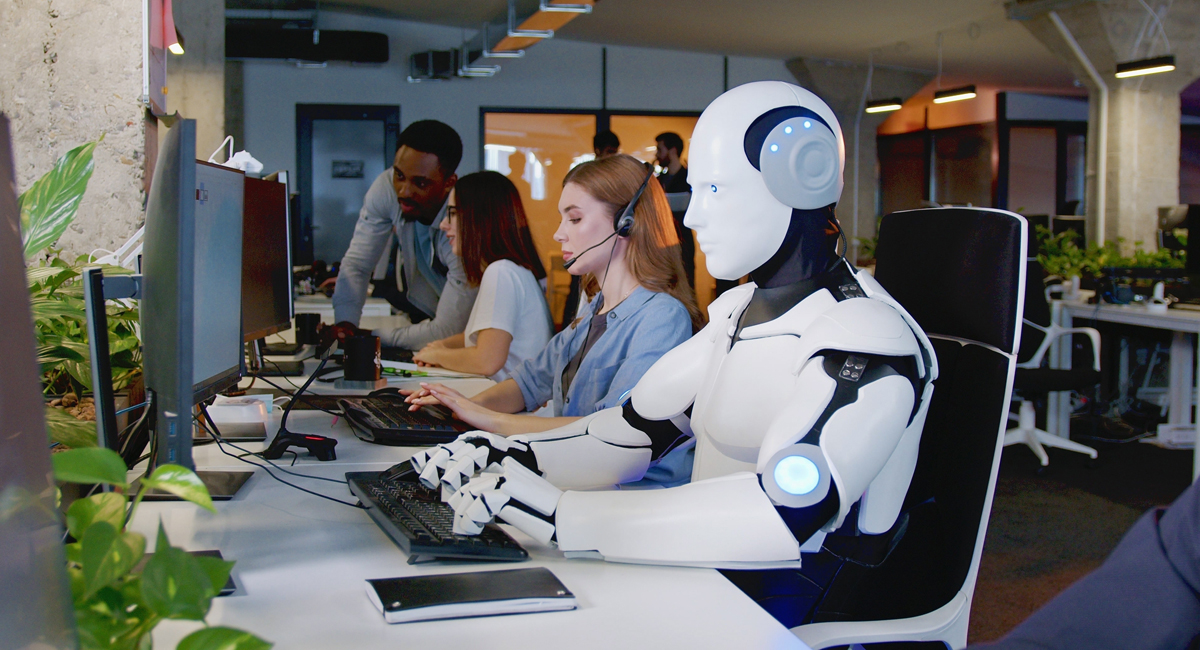
The debate inside most home service businesses sounds something like this:
“We should just use AI — it’s cheaper, and it’s available all the time.”
Versus: “No way. Our customers want to talk to a real person. AI feels cold and impersonal.”
Both sides have a point. And both sides are missing the bigger picture.
The truth is that the most effective lead response systems in the home services industry aren’t built on AI alone or on human agents alone. They’re built on a deliberate combination of both — each doing exactly what it’s best at, covering for the other’s limitations, and working together as a seamlessly integrated system.
This is the hybrid model. And when it’s designed correctly, it delivers something neither AI nor humans can achieve on their own: a lead response system that is simultaneously fast enough to win the speed game, smart enough to convert complex sales conversations, and available enough to capture leads around the clock.
Here’s how it works and why it matters so much for home service contractors trying to grow.
The Speed Problem That AI Was Born to Solve
Let’s start with the most urgent challenge in home service lead management: speed-to-lead.
Research is unambiguous on this point. The probability of converting a web lead drops sharply within the first few minutes of that lead hitting your system. Miss the five-minute window and your odds fall dramatically. Wait an hour, and you’re fighting for scraps. Wait until the next morning, and the homeowner you paid good money to reach has already booked with someone else.
The problem is that five-minute response windows are nearly impossible to guarantee with human agents alone, especially across the full 24-hour day, seven days a week. Your team has lunch. They handle multiple tasks simultaneously. They go home at 5 PM. Lead volume spikes unpredictably after storms, during seasonal peaks, or on weekend afternoons when homeowners finally have time to research. A human-only home services call center will always have coverage gaps, even a well-staffed one.
This is the exact problem AI was built to solve.
An AI voice or chat system doesn’t eat lunch. It doesn’t clock out. It doesn’t get distracted by another task when three leads come in simultaneously at 9:47 PM on a Tuesday. The moment a new lead hits, whether it’s an inbound call, a website form submission, a chat inquiry, or an SMS lead response, an AI-powered system can engage within seconds. Not minutes. Seconds.
For home service businesses, this matters enormously. The first company to respond to a homeowner’s inquiry wins the conversation at a disproportionate rate. When your AI system is responding to leads at 11 PM while your competitor’s voicemail is doing the talking, you’re capturing business that would otherwise evaporate by morning.
What AI Does Exceptionally Well in Lead Response
Before getting into where AI hits its limits, it’s worth being specific about what it genuinely excels at, because its capabilities have advanced significantly, and many home service business owners are working with outdated assumptions about what AI can and can’t do.
Instant, consistent initial engagement. The moment a lead comes in, AI can greet the prospect, confirm receipt of their inquiry, and begin the qualification conversation. This initial contact, which confirms the name, address, nature of the request, urgency, and preferred callback time, is highly structured and repeatable. AI handles it consistently every single time, without variation in tone, quality, or completeness.
Around-the-clock availability. This is the AI superpower that matters most in home services. 24/7 call answering without human staffing costs is no longer a fantasy; it’s table stakes for competitive lead handling. AI handles the initial contact on after-hours calls, weekend inquiries, and holiday surges, ensuring no lead goes dark simply because your office is closed.
Appointment booking for straightforward requests. When a homeowner calls wanting a free roof inspection, a painting estimate, or an HVAC tune-up, and they’re flexible on timing, AI can handle the entire scheduling conversation, confirm availability, offer time slots, collect contact information, and book the appointment directly into your CRM without ever needing a human in the loop. The job is booked. The homeowner is confirmed. Your technician has a schedule. Done.
High-volume SMS and chat follow-up. Following up on every digital lead: web form submissions, social media inquiries, third-party marketplace leads, through multiple channels, and multiple attempts requires a system that doesn’t get tired or fall behind. AI executes follow-up cadences across SMS, email, and chat with perfect timing and zero drop-off. Every lead gets touched. Every attempt is logged.
Consistent data capture. One of the most underappreciated advantages of AI in lead handling is its ability to improve data accuracy. When a human agent takes a call, the quality of the data captured depends on the agent’s attention, skill, and the pace of the conversation. AI captures the same fields every time, in the same format, with the same completeness, and feeds that clean data directly into your CRM with no transcription errors or missed fields.
Where AI Hits Its Limits (And Why This Matters)
Here’s the honest part of the AI conversation that many technology vendors would rather gloss over: AI is not ready to handle the full complexity of a home services sales conversation, and pretending it is will cost you appointments.
Home service leads aren’t homogeneous. Some of them are simple. A homeowner wants a quote for interior painting; they have flexible scheduling and just want to get it booked. AI handles that beautifully.
But many of them are not simple. A homeowner is calling about storm damage and is simultaneously dealing with an insurance claim, has a contractor coming tomorrow for a second opinion, is nervous about getting taken advantage of, and has three follow-up questions about materials before they’ll even consider booking an appointment. That conversation requires empathy, expertise, real-time judgment, and the ability to adapt in the moment.
AI cannot do this well. Not yet.
High-ticket home service sales — such as roofing, windows, bath remodeling, HVAC systems, and flooring — involve significant financial decisions that homeowners often approach with anxiety and skepticism. These conversations frequently include objections, comparisons to competitors, questions about financing, concerns about timing, and emotional components that require a human to hear, respond to, and navigate. The difference between a skilled human agent who handles these moments well and an AI that stumbles on an unexpected question is often the difference between a booked appointment and a lost lead.
This is not a knock on AI. It’s an honest assessment of where the technology is today and where it will be over the next few years. The most sophisticated home service brands understand this, which is why positioning AI as a replacement for human agents is exactly the wrong approach. The right framing is to see AI as an augmentation of human agents, handling the work humans can’t do efficiently, while handing off to humans the work only they can do well.
The Handoff: Where the Magic Happens
The make-or-break element of any hybrid AI-human system is the handoff, the moment when an AI interaction escalates to a live agent. Get this wrong, and you create a jarring, frustrating experience that erodes trust. Get it right, and the transition is seamless enough that many customers don’t even notice it happened.
A well-designed handoff looks something like this:
A homeowner calls at 7:30 PM about a roof that’s leaking after a storm. AI answers immediately, confirms the address and nature of the issue, captures the homeowner’s contact information and urgency level, and begins qualifying the situation. The homeowner mentions they’ve had two other contractors out who gave them conflicting opinions, they’re stressed about the insurance process, and they have a lot of questions about what’s actually covered.
At this point, the AI recognizes, through keyword detection, intent analysis, and signals of conversation complexity, that this call needs a live agent. It seamlessly transfers the call with a warm handoff: the agent receives a brief summary of what’s been captured so far, the homeowner doesn’t have to repeat themselves, and the conversation continues without interruption.
The agent brings empathy, expertise, and judgment to the remainder of the conversation, addressing the insurance questions, building trust, and moving the homeowner toward a booked inspection. The AI did the heavy lifting on availability and initial qualification. The human did the heavy lifting on conversion. Neither one could have done the other’s job as well.
This is the hybrid model working at its best.
The SMS Layer: The Channel Nobody Wants to Miss
One dimension of hybrid lead response that deserves its own attention is SMS — specifically, the role of automated SMS lead response in a complete lead-handling system.
Here’s a fact worth sitting with: a growing percentage of homeowners, particularly younger ones, prefer to communicate via text over phone calls. They’ll ignore an unknown number ringing their phone, but will respond to a text within minutes. If your lead response system is phone-only, you’re invisible to these prospects even if you’re trying hard to reach them.
AI-powered SMS follow-up solves this systematically. When a lead comes in from any source, web form, Facebook ad, HomeAdvisor, or an unanswered inbound call, an automated SMS can go out within seconds. The message is personalized, references their specific inquiry, and provides an easy way to respond, ask a question, or schedule a callback at their convenience.
The data on SMS response rates in lead follow-up is compelling. Text messages are opened at dramatically higher rates than emails, and response rates to a well-crafted follow-up text often exceed those of a cold callback. Adding SMS to your follow-up cadence doesn’t just add another channel; it reaches the portion of your lead pool that was never going to pick up the phone, and brings them back into a conversation.
When SMS is handled by AI within a broader hybrid system, every lead automatically gets this touchpoint instantly, consistently, and without adding any workload to your human team.
Why “AI-First” Is the Wrong Approach for Home Services
It’s worth addressing a positioning question directly, because the market is full of vendors pushing fully automated, AI-first solutions as the future of lead management.
For some industries and some use cases, pure AI makes sense. For high-ticket, appointment-based home services where the average job value ranges from several thousand to tens of thousands of dollars, the evidence points clearly in the other direction.
The homeowner calling about a new roof or a bath remodel is making one of the biggest purchasing decisions of the year. They have questions. They have concerns. They want to feel like they’re in good hands. An AI that mishandles their objection, misunderstands their question, or stumbles on an unexpected turn in the conversation can lose a $15,000 job in thirty seconds.
The risk of over-automating in this space is real, and the better-performing home service brands understand it intuitively: customers tolerate AI for the quick, transactional stuff, confirming an appointment, answering a simple FAQ, accepting a callback request. But when the conversation gets substantive, they want a human. The brands that force AI where humans are needed pay for it in conversion rates.
The right model isn’t AI-first. It’s human-first with AI augmentation. Let AI handle the speed, availability, volume, and routine. Let humans handle the complexity, the objections, the trust-building, and the close. Design the system so that both are working continuously, and the handoff between them is invisible.
That’s the system that converts.
What This Looks Like at Scale: The Pronexis Approach
The NexAI Intelligence Suite — Pronexis’s AI layer — was built with exactly this philosophy in mind. It’s not a replacement for the live-agent call center. It’s the engine that ensures leads never wait, never fall through the cracks after hours, and always receive an initial response that captures the right information and sets up a seamless human conversation when needed.
Here’s how it flows in practice:
A lead comes in at any hour through any channel: inbound call, web form, SMS, chat. NexAI engages immediately: greeting the lead, confirming their inquiry, capturing qualification data, and either booking the appointment directly (for straightforward requests) or scheduling a callback and routing the lead to the right live agent queue.
During business hours, that routing connects to a US-based live agent who is trained specifically in home services — not a generalist answering calls for legal firms, insurance companies, and contractors simultaneously, but someone who understands the roofing sales conversation, the bath remodeling objection, and the HVAC upgrade decision process. The agent picks up with full context on what the AI already captured, so the homeowner isn’t starting over.
After hours, NexAI handles the full interaction when appropriate, booking appointments, capturing information, and setting callbacks and flags urgent situations (an emergency leak, a same-day service request) for immediate escalation to an on-call agent when needed.
The result is a lead response system that covers every hour of the day, every channel a lead might come through, and every level of conversation complexity with no gaps, no drop-off, and no moments where a homeowner reaches voicemail because the system wasn’t designed for right now.
The Competitive Reality
Home service contractors are competing for the same pool of homeowners. The differentiator between the companies growing aggressively and the ones grinding in place is increasingly not marketing budget, not brand reputation, and not even service quality, it’s lead response infrastructure.
The companies winning in this environment are the ones that respond in under a minute, follow up persistently across multiple channels, have a real person available when the conversation gets serious, and never let a lead go dark simply because it arrived at an inconvenient time.
That’s the hybrid model. And it’s not the future of home service lead management, it’s the present.
If you want to see how your current lead response system stacks up against what a well-designed AI-human hybrid can deliver, a Free Lead Response Audit from Pronexis will show you exactly where you stand and exactly where the opportunity is.
Get Your Free Lead Response Audit →
Speed wins the first contact. Skill wins the appointment. The right system delivers both.
Pronexis is a full-spectrum lead management platform built exclusively for home service businesses. Our NexAI Intelligence Suite and US-based live agent call center work together to ensure every lead is captured, qualified, and converted — at any hour, through any channel. Learn more at pronexis.com.